Much has changed in aquaculture in the past decades
Nanaimo Daily News, Opinion, August 21, 2012
BY IAN ROBERTS » Ian Roberts is a graduate of Sir Sandford Fleming’s aquaculture technician program and is Marine Harvest’s manager of communications.
Back in 1988, there were 5.1 billion reasons why I chose aquaculture as a career. Today, there are more than seven billion reasons.
In the 1980s I knew that aquaculture would become an increasingly important solution to feeding a growing world population.
Today, it has done exactly that, by surpassing the global catch of wild fish and reducing fishing pressure on many wild stocks traditionally targeted to feed more than 7.061 billion people on the Earth.
So many things have changed since I began farming salmon 25 years ago. For example:
• Underwater cameras now monitor feeding to ensure little is wasted;
• Effective vaccines continue to improve fish health;
• Land-based recirculating aquaculture systems continue to advance and now provide much larger smolts ready for saltwater;
• Improved feed diets ensure a healthy, nutritious fish and efficient use of our planet’s resources;
• Science-based ocean bottom monitoring ensures that the farm site can continue to operate, sustainably, with little impact on the surrounding environment.
What I didn’t know when I first started a career in aquaculture is that it would become a controversial subject here in British Columbia. Some concerns are well-founded — we need to take care of our oceans and life within them. But others are less genuine — perhaps more market driven or ideological based. Regardless of motive, these concerns have spawned a change in my career path — still a fish farmer — I’ve just traded in my feed scoop for a career in communications.
When we began perfecting the art of growing fish, we neglected to tell our neighbours how we do it and how we strive to do it better. We did a poor job communicating our business.
Today that has changed. Not only do we commit to improving operations, we invest much effort in providing British Columbians with important information about our farm practices. So much so, that this transparency exceeds any other agriculture sector. We’re proud of this.
But an column that appeared in the Nanaimo Daily News on Aug. 14 (Protecting wild fish must be made a priority”) illustrates that communication efforts need to continue or even increase.
The opinion piece contained numerous incorrect statements about fish viruses and farming impacts — just the kind of persistent untruths that are so frustrating to the committed workers on B.C. salmon farms.
I’m sure that by now there has been a letter to the editor correcting those falsehoods in the opinion piece, but just in case you missed it, here are the highlights:
• A single drop of sea water contains about a billion viruses and a few of these viruses, some harmful, most not, may be found naturally in both wild fish and also farm-raised fish. None that may affect our fish are a concern to human health;
• Regular scientific testing shows that exotic viruses or diseases are not being introduced into Pacific waters and fish;
• Much scientific study and recent strong returns of wild salmon indicate that both wild fish and farm-raised fish can co-exist in B.C. waters.
Regardless of whether you’re a proponent or opponent of fish farming, we all have a same motivation. That is, to take care of our oceans. For salmon farmers, we want to care for the oceans not only because it’s important to our coastal home, but because it’s critical to our success. This care is also imbedded in the strict regulations we operate under. These regulations help ensure that an aquaculture site is being farmed in a sustainable manner that can continue to provide food for future generations.
Jacques Cousteau once said “We must plant the sea and herd its animals using the sea as farmers instead of hunters.”
His point is a critical one. The world is no longer talking about whether aquaculture should happen but how to make sure it’s done well.
I agree and feel British Columbia will benefit from a conversation free of misinformation.
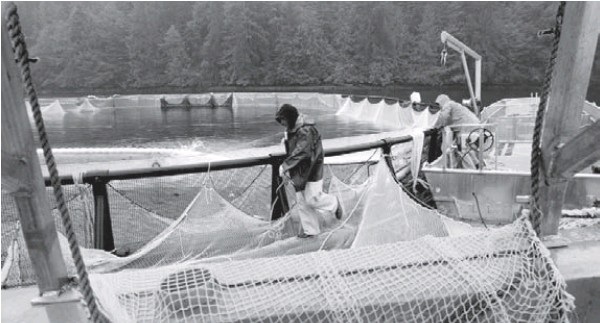
Much has changed in the aquaculture industry in the past decades. Ian Roberts, with Marine Harvest, says everyone wants the same thing — to take care of our oceans.


